When an exterior patio, garage floor, or floating concrete walkway drops into a soil void, homeowners do not have to pay $10,000 for demolition and ugly mismatched fresh concrete. Choosing between old-school mudjacking slurry and modern polyurethane foam jacking comes down to soil weight, hole visibility, and whether wet irrigation runoff washed out the dirt underneath.
What Is the Difference Between Mudjacking and Polyurethane Foam Jacking?
Mudjacking forces a thick concrete-mud mixture weighing over 100 pounds per cubic foot beneath a slab through golf-ball-sized holes, whereas polyurethane foam injects fast-reacting two-part resin weighing 2 to 4 pounds per cubic foot through 5/8-inch penny-sized ports.
| Feature | Traditional Mudjacking | Polyurethane Foam Jacking |
|---|---|---|
| Drilled Hole Size | 1.25 to 2 inches (very visible) | 5/8 inch (dime-sized, blends cleanly) |
| Material Weight | ~100+ lbs per cubic ft (heavy on clay) | 2 to 4 lbs per cubic ft (zero overload) |
| Ready to Drive On | 24 to 48 hours cure time | 15 to 30 minutes instant cure |
| Water Erosion Risk | Can soften or wash out if leaks return | 100% waterproof closed-cell polymer |
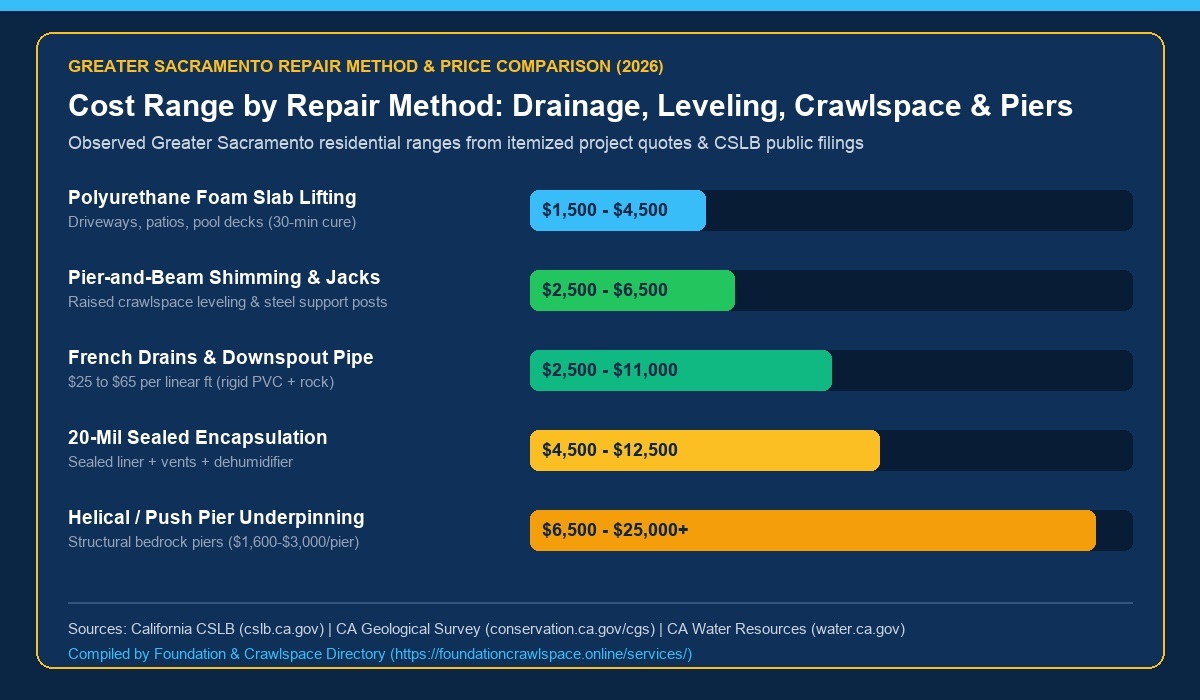
| Typical Project Cost | $900 to $2,400 | $1,500 to $4,500 |
Which Concrete Leveling Method Lasts Longer?
Polyurethane foam outlasts mudjacking slurry by years in Greater Sacramento clay and pool decks because lightweight polymer binds loose sub-base soil without adding another ton of dead weight onto weak earth.
If broken sprinkler pipes or leaky roof downspouts created the hollow void beneath your concrete in the first place, wet slurry can slowly erode again. Closed-cell geotechnical foam locks shut like waterproof marine flotation inside 15 minutes and resists chemical breakdown permanently.
Mudjacking vs. Foam Jacking Cost: Which Gives Better Value?
Foam lifting costs roughly 25% to 40% more upfront than mudjacking ($1,500 to $4,500 vs. $900 to $2,400), yet it still costs 50% to 70% less than jackhammering and repouring new concrete.
When Should You Use Foam Jacking vs. Steel Piers?
Never let a salesperson pump foam under a sinking heavy exterior load-bearing perimeter wall expecting permanent house underpinning without checking soil depth first; foam lifts floating slabs and interior pockets cleanly, whereas sinking multi-story perimeter beams need steel push or helical piers.
To compare floor elevation options inside your home or garage, read our Sacramento house leveling guide, verify contractor licensing on California CSLB, and stop washout permanently by routing gutters away from slab edges.