When waterlogged soil presses horizontally against a raised-perimeter stem wall, walk-out daylight basement, or hillside concrete wall, horizontal and stair-step cracks open across the interior face. Fixing bowing early with carbon fiber or tieback anchors saves the concrete before the wall shears off its footing and forces a full excavation rebuild.
Why Do Basement and Foundation Walls Bow Inward?
Heavy rain trapped in clay backfill outside concrete walls multiplies sideways hydrostatic force, bending the middle third of the wall inward until tension cracks split mortar joints or poured concrete.
Hydrostatic Pressure, Saturated Clay Soil, and Lateral Push
Across sloped lots in Auburn, Placerville, Folsom, and older Sacramento basements, clay backfill expands sharply when downspouts dump roof water along the perimeter wall. Even without freezing winter frost heave, wet clay weighs well over 120 pounds per cubic foot and never stops pushing inward until surface water is drained away.
How Much Wall Bowing Is Dangerous?
Measuring inward deflection with a 6-foot spirit level tells contractors how urgent the problem is. Minor movement under 1 to 2 inches leaves plenty of vertical bearing strength on top of the sill plate, while deflection over 2.5 inches risks upper floor joists sliding off their wall seat.
Carbon Fiber Straps vs. Wall Anchors: Which Repair Method Is Better?
Choose carbon fiber straps when wall bowing is under 2 inches and you want a flush painted finish inside the room; choose steel earth anchors or helical tiebacks when deflection exceeds 2 inches or you want to gradually crank a bowed wall back toward straight.
| Wall Bracing Method | Max Wall Deflection | Can It Pull Wall Back? | Typical Price Range |
|---|---|---|---|
| Carbon Fiber Straps | Up to 2 inches inward | No (locks wall permanently) | $500 to $900 per strap |
| Steel Wall Anchors / Tiebacks | 2 inches to 4+ inches | Yes (gradual tightening) | $850 to $1,500 per anchor |
| Steel I-Beam Wall Bracing | Over 2 inches (tight lots) | Partial stabilization | $700 to $1,200 per beam |
Can Carbon Fiber Straps Straighten a Bowed Wall?
No. Carbon fiber weave is stronger in tension than steel once epoxied to clean ground concrete, which halts inward movement cold, yet it has zero pulling force to reverse prior bowing.
If homeowners insist on pulling a heavily bowed daylight-basement wall back upright before drywalling, crews must excavate a trench outside the wall to relieve dirt pressure first, then crank steel wall anchors or helical tiebacks over time.
How Much Does Bowing Wall Repair Cost & How Do You Prevent It?
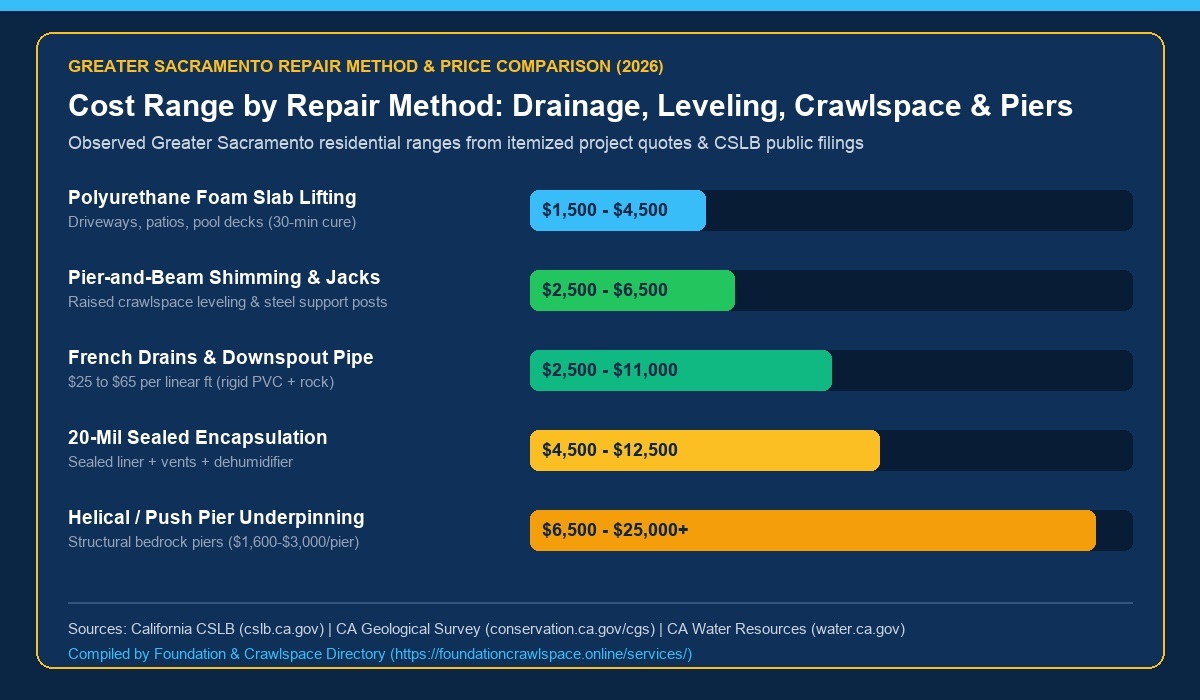
Reinforcing a standard 25-foot bowed wall typically runs $3,500 to $7,500 depending on strap spacing or exterior tieback access, and adding exterior downspout piping stops lateral clay pressure from returning.
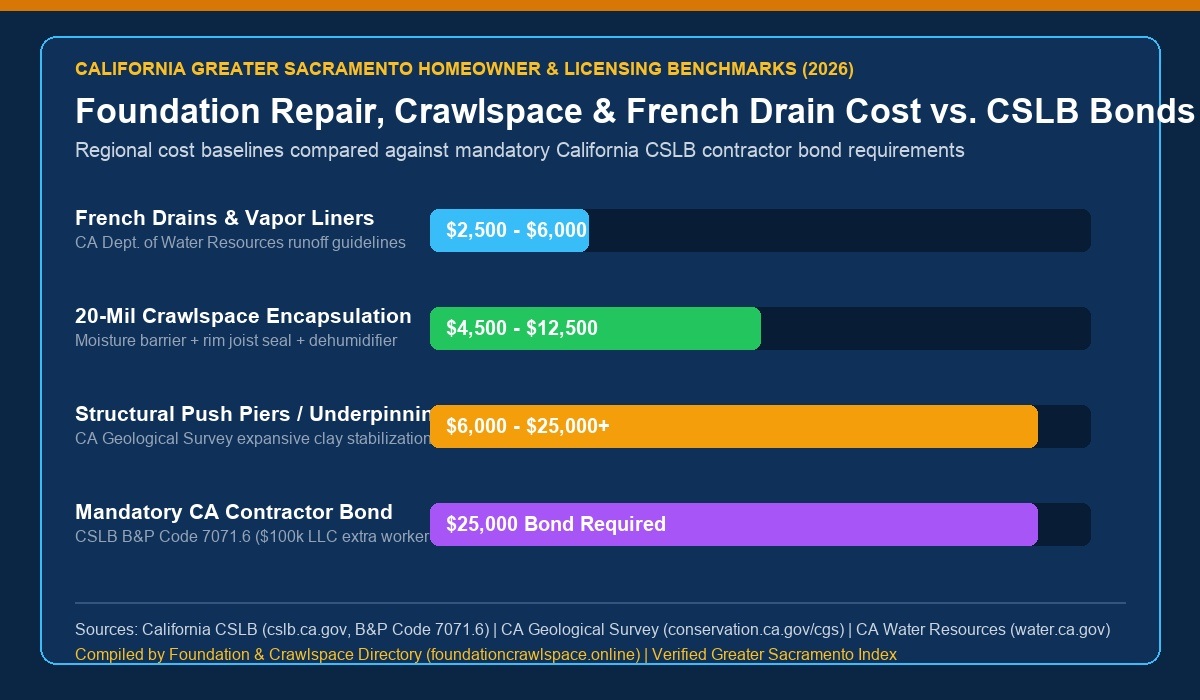
Pairing structural wall bracing with French drain installation and grading cuts water weight behind your wall by half. Before ordering repairs, verify contractor structural licenses via the California CSLB lookup tool and review regional foundation stabilization options.