Steel push piers and helical piers both lock a sinking foundation onto deep, dry soil strata below active valley clay, but they use completely different mechanics to get there. Picking the wrong pier for a light patio room, detached garage, or multi-story Sacramento house can leave a wall under-supported or push your project budget thousands higher than necessary.
What Is the Difference Between Helical Piers and Push Piers?
Push piers are driven straight into the earth using the downward weight of the building itself as counter-resistance, whereas helical piers have forged steel screw plates welded to the shaft so an excavator or handheld torque head screws them deep into the soil independently.
How Steel Push Piers Use Structural Weight to Reach Load-Bearing Strata
Once a crew excavates down to the bottom edge of your footing and bolts on a heavy steel L-bracket, a hydraulic cylinder pushes smooth 3-inch galvanized steel pipe sleeves into the ground. Because resistance comes from pushing against your house wall, push piers excel on heavier two-story homes where plenty of dead load sits over the footing.
How Helical Piers Screw Into Soil Like Giant Anchors Without Structure Weight
Helical piers resemble oversized auger screws with circular pitched plates near the tip. Technicians attach a hydraulic torque head to a mini-excavator or skid steer and rotate the shaft into the ground while tracking exact torque pressure until the lead plates lock into dense hardpan clay or decomposed granite. Because they pull themselves down by torque rather than pushing against the house, they cannot accidentally lift a lightweight porch slab prematurely.
Side-by-Side Comparison: Load Capacity, Installation Depth, and Equipment Needed
| Comparison Factor | Steel Push Piers | Helical Piers (Screw Piers) |
|---|---|---|
| How Driven | Hydraulically pushed using building weight | Screwed mechanically using torque drive |
| Best Structure Weight | Heavy 2-story homes, commercial walls | Lighter 1-story wings, porches, retaining walls |
| Sacramento Depth Range | 12 ft to 40+ ft to hard refusal | 10 ft to 35+ ft verified by torque gauge |
| Typical Cost Per Pier | $1,600 to $2,900 installed | $1,700 to $3,100 installed |
Which Pier System Is Best for Your Home's Soil and Structure?
Expansive basin clay across Sacramento, Elk Grove, and Roseville can absorb water down 6 to 12 feet deep; either pier works once anchored below that active moisture zone, so structural load and yard access usually dictate the winner.
Best Foundation Piers for Heavy Multi-Story Homes vs. Lighter Structures
If two corners of a heavy stucco home or brick fireplace chimney are dropping, steel push piers generate massive vertical capacity without widening the access pit for heavy excavator swing clearance. Conversely, for single-story room additions, covered patios, detached shops, or raised crawlspace beam piers, helical piers achieve rock-solid load ratings without risking upward punch on light concrete.
Choosing Piers for Expansive Clay, Loose Fill, or High Water Tables
In soft river-silt neighborhoods near the Sacramento River, Pocket, or Natomas, upper soil layers lack friction until piers pass 20+ feet down. Contractors monitor torque meters continuously on helical installations and pressure gauges on push piers so every pier hits engineered refusal before brackets tighten. Geological hazard guidance from the California Geological Survey highlights why anchoring past seasonal swelling zones protects residential concrete.
How Much Do Helical Piers vs. Push Piers Cost?
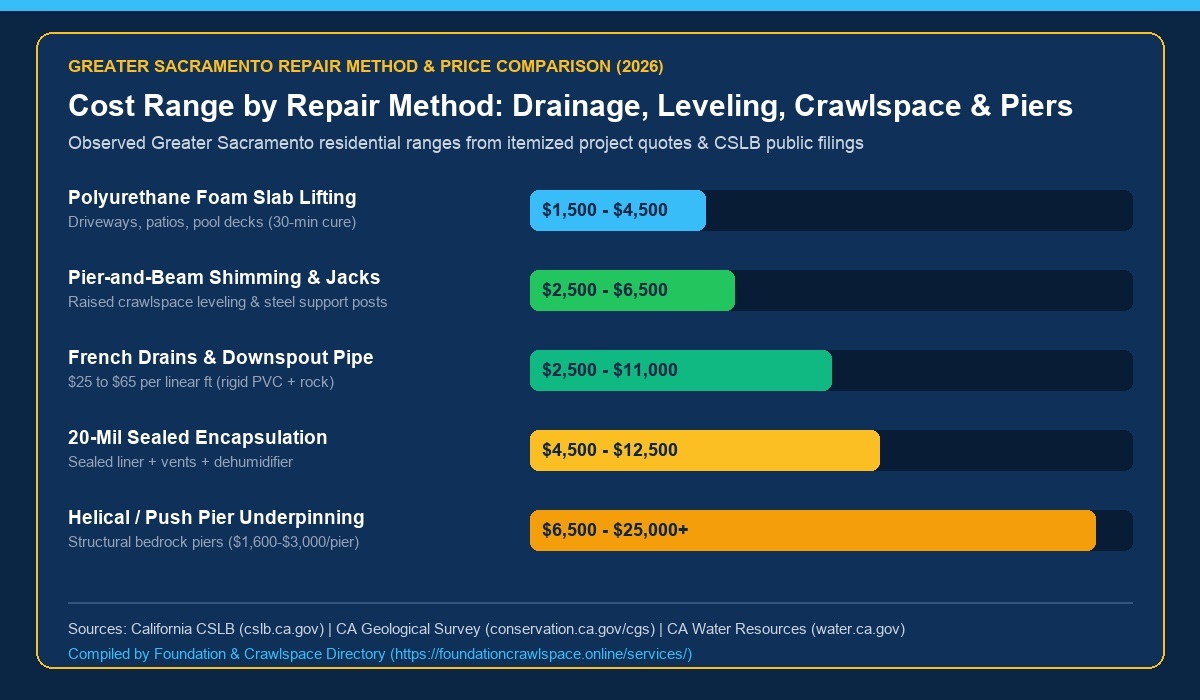
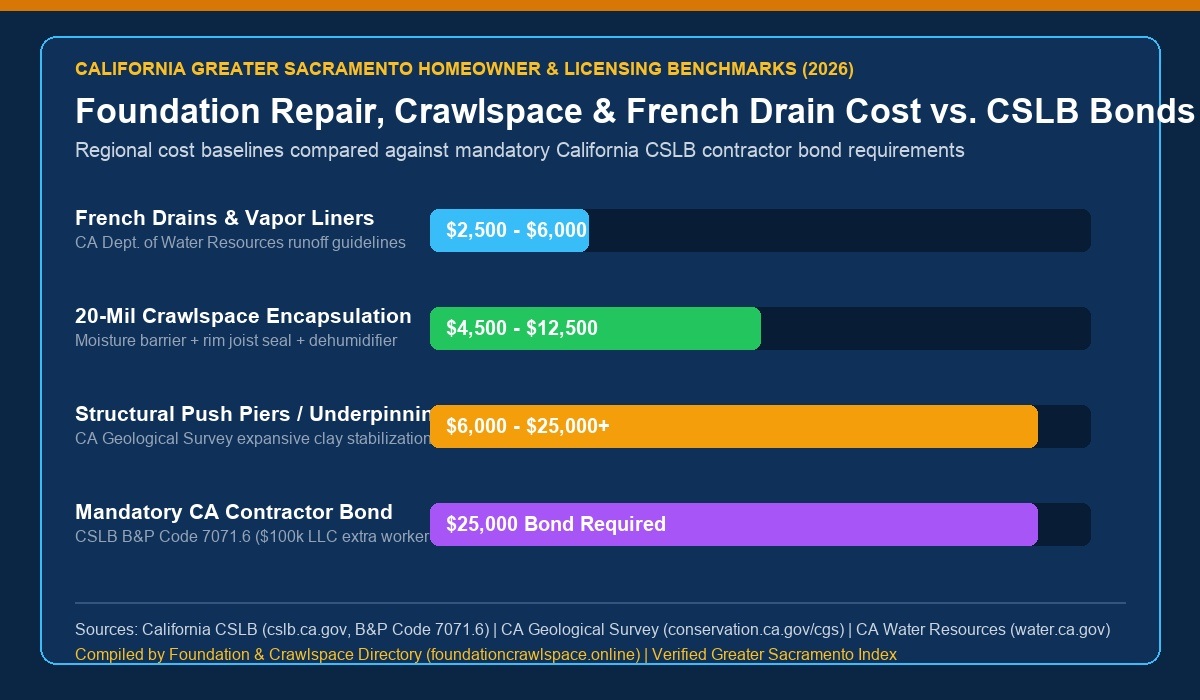
Most residential push pier and helical pier installations across Greater Sacramento average $1,600 to $3,000 per pier installed, including excavation, bracket steel, lifting rams, and concrete hole patching.
Average Cost Per Helical Pier vs. Cost Per Push Pier
Engineers normally space piers every 6 to 8 feet along the sinking section of a perimeter wall. An 8-pier repair along a settled garage wall or back bedroom typically totals $13,000 to $21,500, while full-house perimeter underpinning with 16 to 22 piers runs $26,000 to $52,000+.
Factors That Increase Underpinning Price
Hand-digging under concrete decks, saw-cutting interior family room slabs, moving irrigation lines, or encountering unexpected cobble rock that slows pier advancement adds labor hours. Pulling city building permits and hiring an independent structural engineer adds $1,200 to $2,500 combined on complex jobs.
What Happens During Foundation Pier Installation?
Crews dig small 2-by-3-foot access pits down to the bottom of the footing, chip off any lip so brackets sit flush under concrete, drive each pier to refusal depth, and then synchronize hydraulic jacks to stabilize or lift the wall gently.
Most standard residential underpinning finishes in 2 to 4 workdays without homeowners moving out. When comparing two competing pier quotes, confirm active contractor bonding via the California CSLB registry, compare pier spacing charts, and review our full Sacramento foundation repair cost guide before signing a contract.